
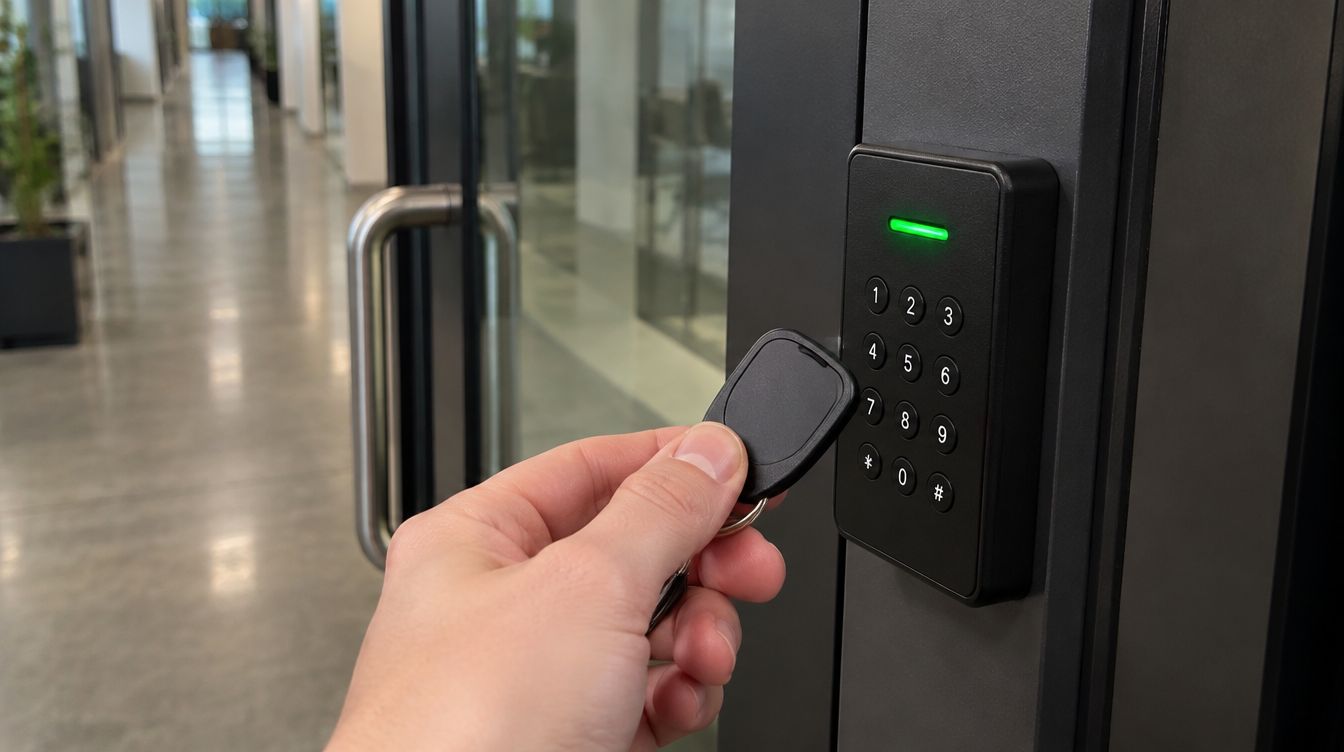
Access control service and maintenance from ClearMax Labs keeps a Chicago building's door system matched to the people who actually work there. Staff turn over, hardware wears, and the door list drifts from what is on the wall. Service is the work that keeps all of that current after the installers leave, on a standing plan or when a building calls.
Last updated: November 2026
Which jobs come up after handover?
Most service work is small and frequent rather than large and rare. In a typical Chicago office, clinic or warehouse it falls into five groups:
- People changes. A new hire needs a badge on day one. Someone leaves and loses every door that afternoon. A cleaning contract changes hands, so one crew's credentials come out and another's go in. Holiday hours, summer Fridays and inventory weekends each need a schedule.
- Hardware that wears. A strike that stopped catching after a frame settled. A closer pulling too hard once the building heat came on. A reader cracked by a cart. A lock power supply whose backup battery has reached the end of its life.
- Doors that changed. A tenant expands onto a second floor, a storage room becomes a server room, a back door gets a new frame during a renovation.
- Records. The door list, the cable labels and the change history, updated every time something moves, so the next technician does not start from a guess.
- The add-ons on the same plan: the entry intercom and the door cameras that share the cable routes.
Why test the exits on a schedule?
Because an exit that fails does not announce itself until someone needs it. A scheduled test walks each controlled opening from the inside and checks that leaving still works the way the code describes and the door list records.
On a door released by its hardware, the test is the lever or the bar. The adopted code expects that hardware to have an obvious method of operation, work with one hand, directly interrupt power to the electric lock and unlock the door immediately, and it expects loss of power to the locking system to unlock the door automatically. So the technician pushes the bar, then cuts the lock's power and checks that the door is free.
On a door released by a sensor, the test includes the button. The PUSH TO EXIT device beside the door must cut power to the lock independent of other electronics and keep the lock released for not less than 30 seconds, so the technician presses it and times the release. A shorter hold is a setting to correct that day.
Delayed egress doors get their own steps. Chicago requires the door to allow egress not more than 15 seconds after pressure on the egress-side hardware for not more than 1 second, with an audible signal near the door, and it does not allow the time delay to be field adjustable. The city also says that once the delay electronics have been deactivated, rearming them is by manual means only. A test of one of these doors therefore ends with someone rearming it by hand and confirming it rearmed.
A standing plan, or calls when needed?
A standing plan fits a building with steady staff turnover, more than one location, or a landlord who expects records. Changes and exit tests are booked ahead, and the technician who arrives already knows the doors. A call-when-needed arrangement fits a small office with a stable team and a handful of openings. Either one can take in the office network the doors depend on.
How is the cost set?
In a written proposal, built from the number of controlled doors, the number of locations and the number of people on the system. A building that adds an intercom, cameras or another floor later adds them to the same proposal instead of starting a second one.
What does a visit leave on file?
A short note per door: what was tested, what was found, what was adjusted or replaced, and anything left for a later visit with the reason. The note is filed with the door list.
Can service take on a system someone else installed?
Usually. The first visit documents what is there: each door, its hardware, the controller, the cable paths and who holds the administrator login. Every exit is tested before anything is changed. Where a part is failing or a door no longer matches its record, the note says so, and the repair is proposed in writing first.
Starting service for a Chicago building
Send the door count, the address, what is installed today and who administers it now through the project form. A reply asks what the list leaves open and proposes either a standing plan or call-when-needed terms. New buildings start with the door plan, and service picks up from the handover records.